

Spray foam is sold as a lifetime product. Here's what that claim actually depends on, and what can shorten it well before "lifetime."
Spray foam manufacturers generally rate the product to last the lifetime of the building — commonly cited as 80 to 100 years — and unlike fiberglass or cellulose, properly installed spray foam doesn't settle, sag, or lose R-value meaningfully over time. That's the real, legitimate advantage of the product. But "the product is rated to last" and "your installation will last" are two different claims, and the gap between them comes down entirely to how the job was done.
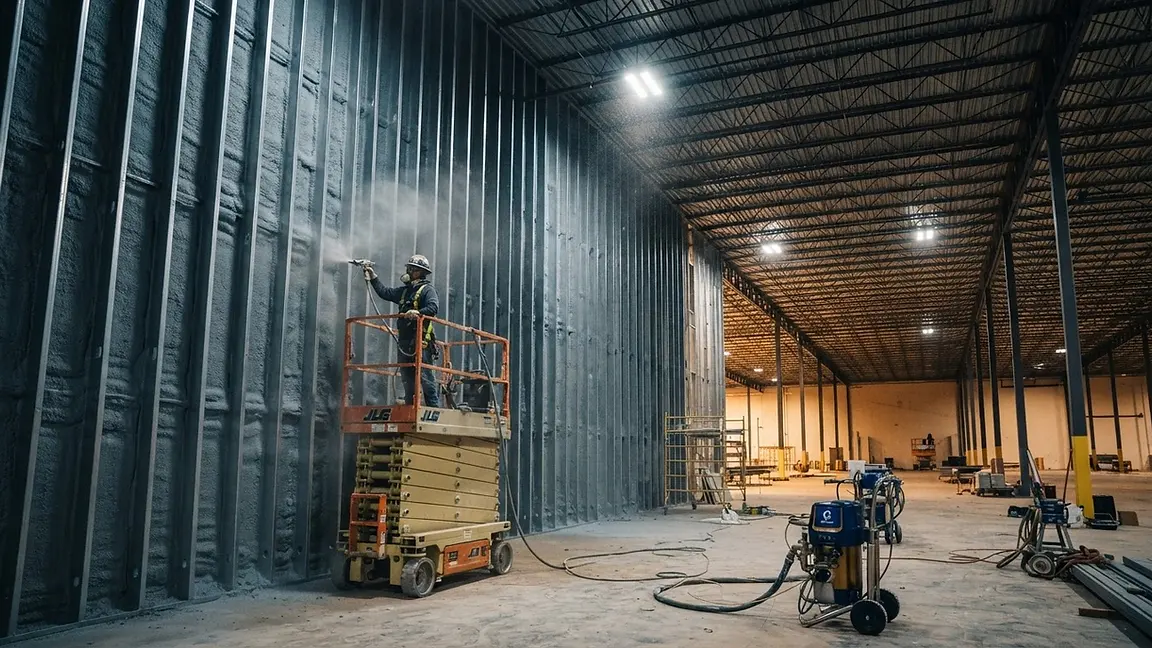
The single biggest factor in spray foam's actual lifespan is correct mix ratio at the time of spraying. Closed-cell and open-cell foam are both created by combining two chemical components (commonly called the A-side and B-side) in a precise ratio, at the right temperature and pressure, through calibrated equipment. An off-ratio spray doesn't just look or smell different on install day — it can lead to foam that shrinks, cracks, or degrades over months or years instead of lasting decades. This is invisible to a homeowner at the time of installation, which is exactly why contractor experience and equipment calibration matter more for spray foam than almost any other insulation product.
Substrate prep matters nearly as much. Foam sprayed onto a surface that's damp, dirty, or outside the manufacturer's temperature range for adhesion won't bond properly, even if the mix ratio is perfect. Poor adhesion shows up later as foam pulling away from framing, which both reduces performance and can trap moisture behind it.
Environmental exposure plays a role too. Foam exposed to direct UV light degrades over time (which is why exterior applications require a protective coating), and foam in areas with chronic, unaddressed moisture problems — a roof leak that goes unnoticed for months, for example — can be compromised by the water intrusion itself rather than any flaw in the foam.
What this means practically: a properly installed spray foam job, by a crew that calibrates their equipment and preps the substrate correctly, genuinely should outlast most other components of the building. A rushed job from an underqualified crew might look identical on install day and fail in ways you won't see until the drywall comes down years later. That's exactly why we push people, in our own quote-reading guide, to ask about mix ratio and equipment calibration before hiring anyone — it's the detail that actually determines whether "lifetime product" is a real claim or a marketing line.
Get a quote that spells out every line — foam type, thickness, R-value, and warranty.