

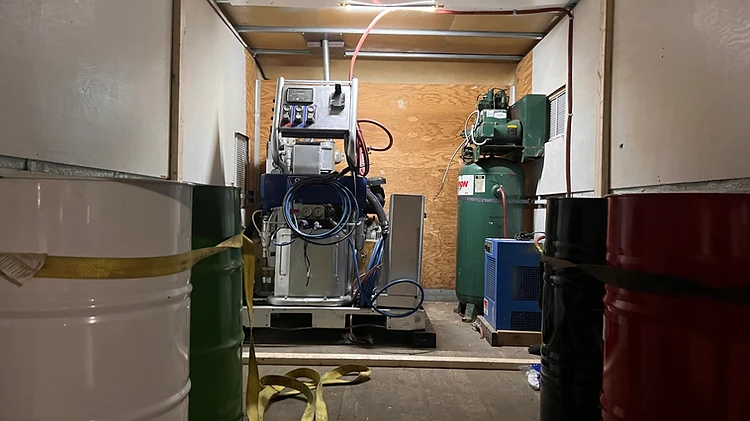
Bad spray foam doesn't always look bad at first. Shrinkage, odor, fish-eyes, and poor adhesion are warnings. Here are the signs to check before you pay the final invoice.
Good spray foam, properly mixed and applied, is one of the best building materials you can put in a wall. Bad spray foam is an expensive nightmare that has to be scraped out and redone. The good news is that most installation failures are visible within the first few weeks if you know what to look for. Here are the seven signs that your foam wasn't installed right.
1. Shrinkage and pulling away from the studs. Foam that shrinks and separates from the framing was almost always sprayed off-ratio — the A and B chemicals weren't mixed in the right proportion, usually because the rig's temperature or pressure was wrong. Gaps between foam and stud mean air leaks, which means the insulation isn't insulating.
2. A persistent fishy or chemical odor. Properly mixed foam cures and off-gasses within hours. If your house still smells weeks later, the foam didn't cure fully — again, usually a mix-ratio problem. Off-ratio foam never fully cures and can keep off-gassing indefinitely. This is a health issue, not just a smell issue.
3. Fish-eyes and rough, cratered surface. A smooth, orange-peel texture is normal. Deep craters, bubbles, and a rough, sandy surface mean the foam was sprayed too cold, too far away, or onto a wet substrate. It won't perform or adhere properly.
4. Soft or spongy closed-cell foam. Closed-cell should be hard to the touch. If it dents under a thumbnail, it's under-mixed or under-heated and won't hit its rated R-value or act as a vapor barrier.
5. Voids and thin spots. Walk the walls with a flashlight. Foam should be consistent thickness across the cavity. Thin spots at the edges or corners mean the technician rushed or didn't have the gun control for the geometry.
6. Foam on things that shouldn't have foam. Overspray on windows, wiring, mechanicals, and adjacent surfaces means poor masking and poor discipline. If they were careless with overspray, they were careless with the foam too.
7. No written warranty. If the installer won't put material and workmanship guarantees in writing, they don't stand behind the install. A credible contractor hands you the warranty before you ask.
Catch any of these before final payment. A reputable contractor will fix shrinkage, voids, and off-ratio foam — that's what workmanship coverage is for. The ones who won't are the ones who knew it was wrong when they left.
Get a quote that spells out every line — foam type, thickness, R-value, and warranty.